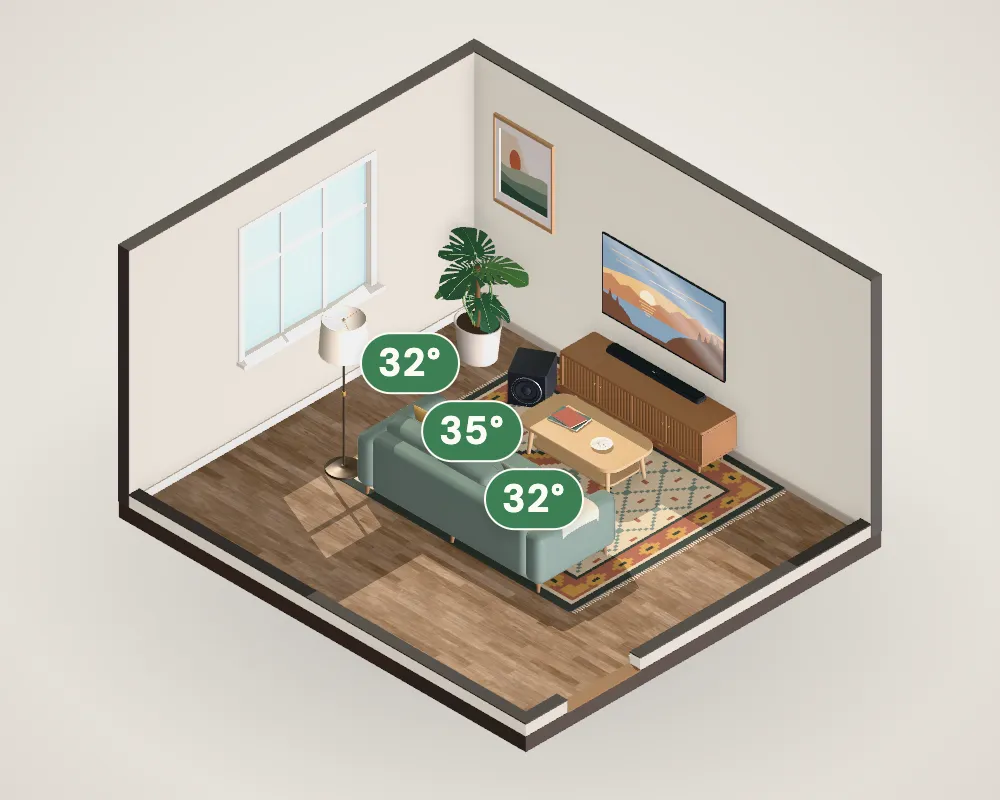
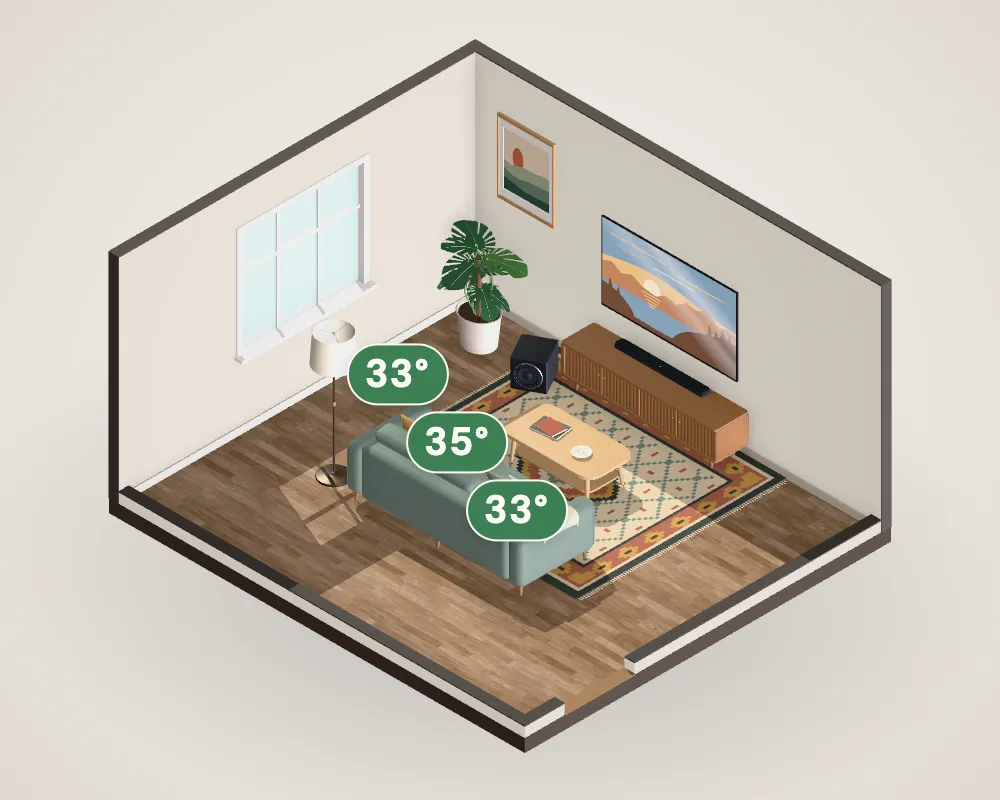
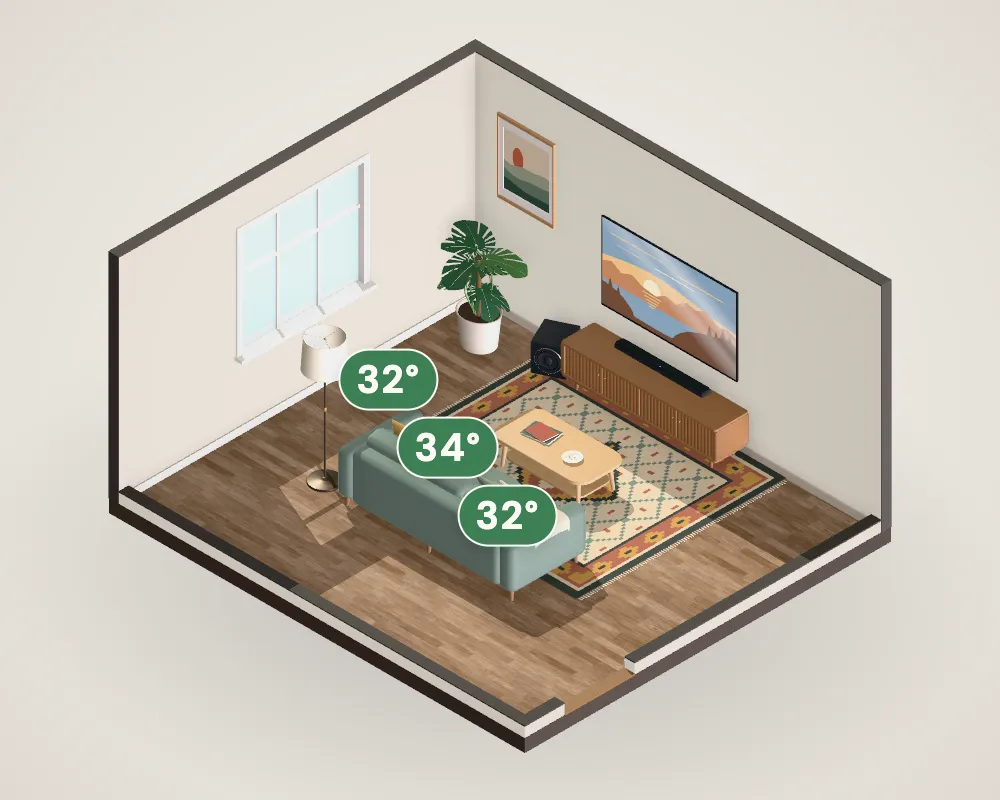
65 vs 75-inch TV: how much bigger, and which fits your room
Both sizes from the same sofa, the difference in inches, and a simple rule for which one suits your seating distance.
A 75-inch TV is 8.7 inches wider and 4.9 inches taller than a 65-inch, with 33% more picture. Sit closer than about 7 ft 6 in and the 65-inch is the comfortable size; further than about 8 ft 10 in and the 75-inch is; in between, both work.
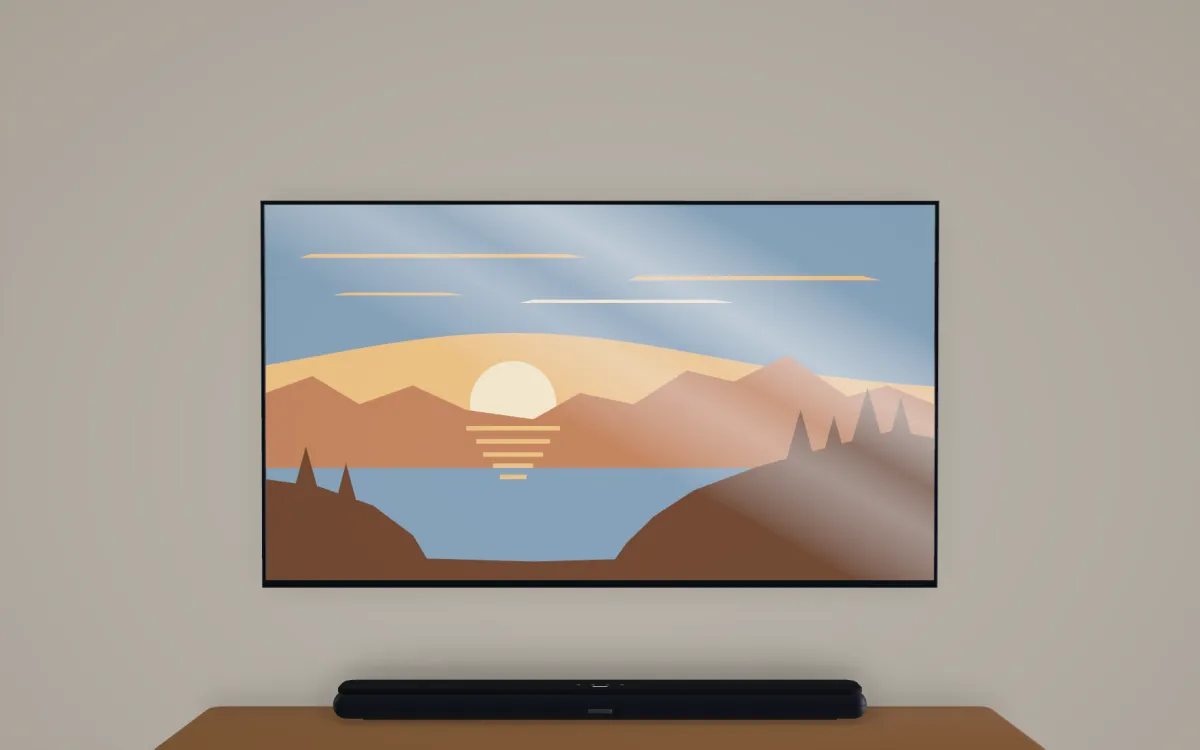
The size difference
| 65-inch | 75-inch | Change | |
|---|---|---|---|
| Screen width | 56.7″ | 65.4″ | +8.7″ |
| Screen height | 31.9″ | 36.8″ | +4.9″ |
| Picture area | 12.5 sq ft | 16.7 sq ft | +33% |
| Real models’ width (no stand) | 56.5–59.4″ | 65.3–65.8″ | +7.6″ |
| Best distance (30–40°) | 6.5–8.8 ft | 7.5–10.2 ft | +1 ft |
Which size for your seating distance
Measure from where your eyes will be on the sofa to the TV wall. The viewing angle tells you how big each screen will look from there:
| You sit | 65″ | 75″ | Better fit |
|---|---|---|---|
| 5 ft | 51°immersive | 57°immersive | 65″ or smaller |
| 6 ft | 43°immersive | 49°immersive | 65″ or smaller |
| 7 ft | 37°recommended | 43°immersive | 65″ |
| 8 ft | 33°recommended | 38°recommended | Either |
| 9 ft | 29°relaxed | 34°recommended | 75″ |
| 10 ft | 26.5°small | 30°recommended | 75″ |
| 11 ft | 24°small | 28°relaxed | 75″ or larger |
| 12 ft | 22°small | 26°small | 75″ or larger |
How to choose
Moving from 65 to 75 inches makes the most difference to people sitting nine feet or more away: from there a 65-inch fills just under 30° of your view, a 75-inch about 34°.
Check the wall before you decide. The extra 8.7 inches of width is what usually rules out a 75-inch: between two windows, beside a door, or inside a built-in.
Two practical checks come before the angle. Wall width: allow for the full set, not just the screen (real 75-inch models are 65.3–65.8 in wide). Stand width: if the TV goes on furniture, the feet or pedestal must fit on it; feet near the edges need a console almost as wide as the TV. The size guides list stand widths for real models: 65-inch and 75-inch.
Questions people ask
How much bigger is a 75-inch TV than a 65-inch?
The 75-inch picture is 8.7 inches wider and 4.9 inches taller, and 33% larger in area: 65.4 × 36.8 inches against 56.7 × 31.9.
Should I get a 65 or 75-inch TV for 9 feet?
From 9 feet, a 65-inch screen fills 29° of your view and a 75-inch 34°. The recommended band is 30–40°, so the 75-inch is the better fit.
At what distance does a 75-inch TV become too big?
It passes THX’s 40° cinema angle closer than about 7 ft 6 in, and the 61° maximum for 4K video that CEDIA/CTA RP22 cites closer than about 4 ft 7 in. Many people like a big screen for films and games; for everyday TV, 30–40° is the comfortable range.
Sources
- SMPTE (2017). ST 2080-3:2017 Reference Viewing Environment for Evaluation of HDTV Images.Standard
- THX. Viewing Guide FAQ.Professional guide
- CEDIA / CTA (2023). CEDIA/CTA-RP22 Immersive Audio Design Recommended Practice, v1.2.Standard
Numbers on this page follow these sources. Where a figure is our own calculation or a rule of thumb, the text says so. Found a mistake? Tell us.